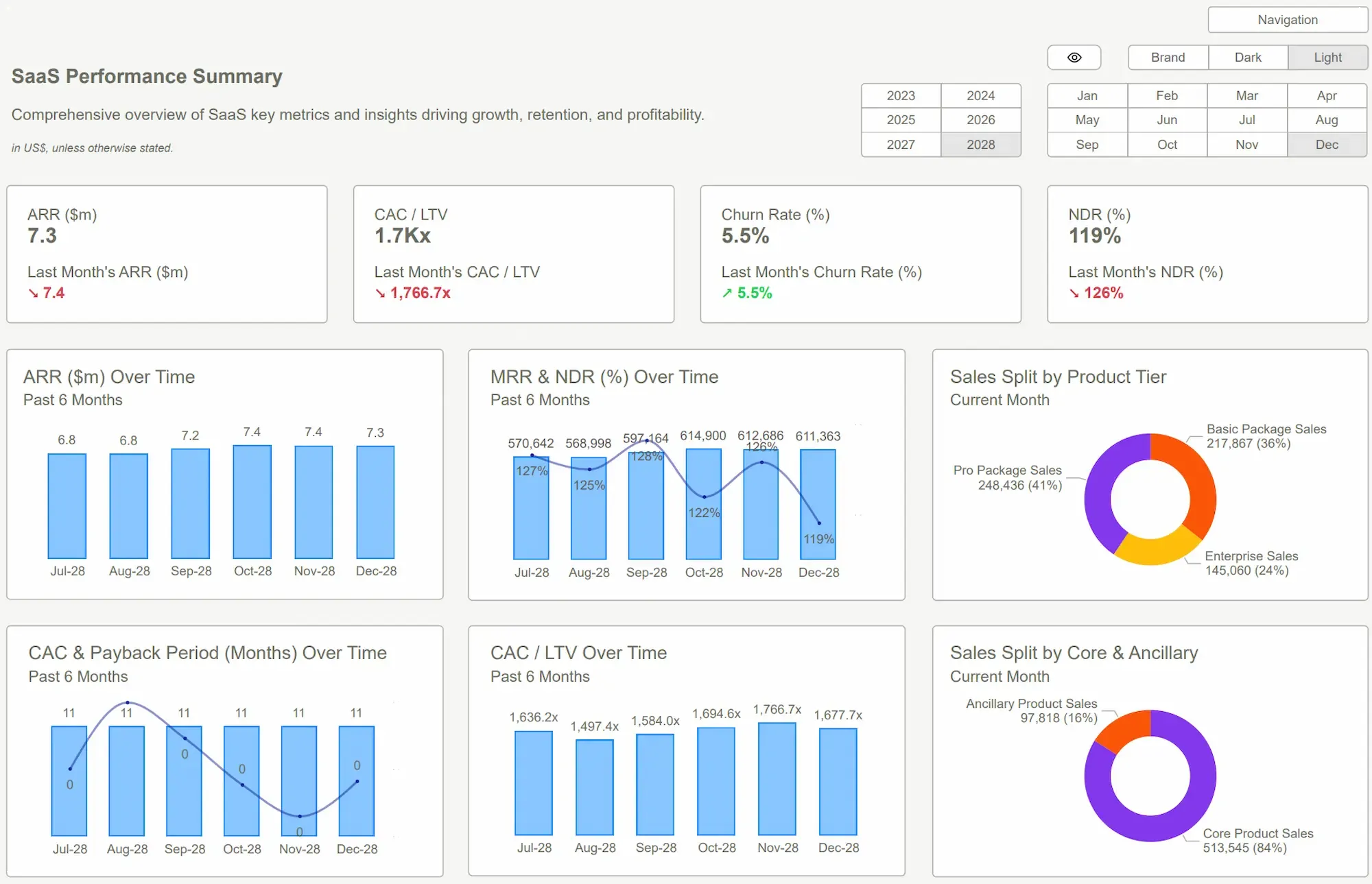
In a high-stakes board meeting, time is the most valuable commodity in the room. Directors and stakeholders do not congregate to watch a presenter navigate through a maze of filters or explain away acluttered visual. They gather to make decisions.
A board meeting moves fast, and leadership expects clarity within seconds. When a dashboard fails to deliver that clarity, attention drops, and the momentum of the meeting stalls. Many internal reporting teams find themselves stuck using a board report Power BI template that may have been functional in the past, but now feels disconnected from the speed and expectations of modern business.
The Issue: Architecture Over Data
The problem rarely stems from a lack of data. In fact, most organizations have more data than they know how to manage. The problem lies in architecture, specifically, how the data is structured, visualized, and interpreted. If your reporting feels heavy, repetitive, or requires a manual to understand, it is a signal that your reporting frameworkneeds a strategic overhaul.
The Trap of Rigid Structures
One of the most common reasons a report feels dated is the reliance on a legacy format that simply repeats the same high-level metrics in the same boxes month after month. While consistency is a virtue in data integrity, it can be a vice in communication.
Modern reporting requires contextualflexibility. This doesn't mean changing the data sources, but rather changingthe emphasis. A modern board report Power BI template allows the most urgentsignals, whether they are growth opportunities or emerging threats, to takecenter stage.
Moving Beyond Raw Numbers to Contextual Narrative
Numbers alone do not drive action; they only state a fact. Context, however, provides the "why" behind the "what."
A dashboard that shows a 10% dip in quarterly revenue without an immediate, visible explanation creates an information vacuum. In that vacuum, stakeholders will create their own narratives, often leading to unnecessary concern or misaligned solutions. When leaders must manually interpret data or search for the cause of a trend, decision-making slows down and risk increases.
A sophisticated board report Power BI template must bridge the gap between performance and explanation. It should ideally answer three essential questions on a single screen:
- What changed? (The Metric)
- Why did it change? (The Driver)
- What needs attention? (The Action)
When these answers are integrated directly into the visual flow, through smart tooltips, integrated commentary, or clear variance analysis, the board discussion shifts from "What are we looking at?" to "What should we do about this?"
The Cost of Visual Overload
There is a common misconception in data reporting that more information equals more value. In the context of executive reporting, the opposite is true. Every additional chart, border, and color on a page adds to the cognitive load of the viewer. When a dashboard is overcrowded, the brain has to work harder to filter out the noise to find the signal.
Effective dashboards prioritize a small number of high-impact visuals. Each element on the page must earn its keep. If avisual doesn't directly contribute to a strategic decision, it belongs in asupplemental drill-down report, not the executive summary.
Common design flaws that make dashboards feel dated include:
● Excessive Visual Density: Cramming too many charts onto one page.
● Lack of Hierarchy: Giving a minor expense category the same visual weight as total net profit.
● Inconsistent Color Theory: Using a rainbow of colors with no semantic meaning, rather than a limited palette that highlights exceptions.
● Poor Spacing: A lack of white space makes it difficult for the eye to processin dividual data points.
Why Technical Performance isa Trust Factor?
Performance is an often-overlooked aspect ofreporting freshness. In a boardroom, a three-second delay can feel like an eternity. Slow performance doesn't just disrupt the flow; it subtly erodestrust in the data. High-quality board report Power BI templates ensure the data model is lean and visuals are optimized for train of thought analysis.
When a dashboard is sluggish, the unspoken assumption is that the data is messy, the model is unoptimized, or the technology is lagging. Performance issues typically stem from poor data modeling, excessive use of complex DAX measures, or simply having too many visuals on a single page.
A high-quality template ensures that the data model is lean and the visuals are optimized for speed. Fast response time sallow for train-of-thought analysis, where a leader can ask a question, afilter can be applied, and the answer appears instantly. This responsive ness supports a culture of data-driven confidence.
Redefining Strategy with a PowerBiKit Framework
To move away from the limitations of legacyreporting, many organizations are turning to professional design frameworks. PowerBiKit provides a bridge between raw data engineering and high-end executivecommunication.
The primary advantage of using a dedicatedsystem like a PowerBiKit template is the elimination of the blank canvasproblem. Instead of spending dozens of hours debating where a button should goor which shade of blue to use, teams can deploy a proven UI/UX frameworkdesigned specifically for the C-suite.
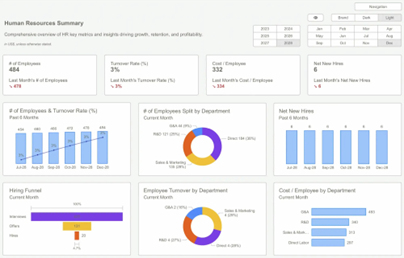
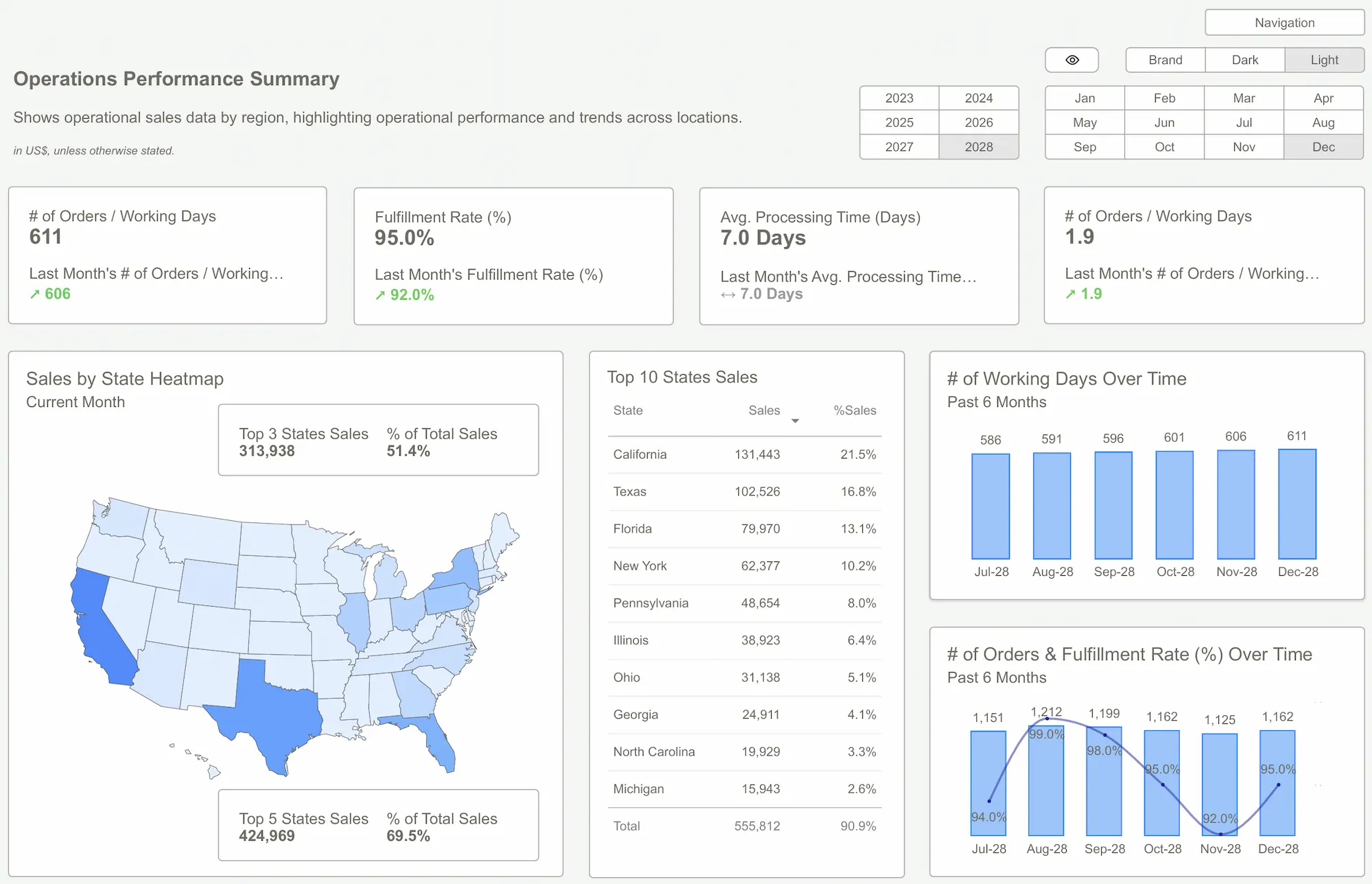
By using a PowerBiKit template, teams eliminate the blank canvas problem. These board report Power BI templates are built with a mobile-first, executive-always mindset, emphasizing a logical flow from high-level summariesto intuitive drill-downs.
The Real Business Impact Goes Beyond Visual Design
Choosing professional Power BI templates is not just a technical upgrade. It shapes how an organization communicates, decides, and grows. The impact extends far beyond cleaner dashboards and better layouts, influencing how teams interact with data every day.
A well-designed reporting system reflects credibility and builds trust across stakeholders. It also improves clarity, reduces errors, and saves valuable time that can be redirected toward strategic work.
Key business impacts include:
● Professional presentationbuilds trust: Clean, modern dashboards signal that theorganization values accuracy and structured decision-making. This strengthensconfidence among leadership, clients, and investors.
● Clarity drives confidentdecisions: Well-structured visuals present insightsclearly, reducing the need for manual interpretation. Decision-makers canquickly understand performance and act with certainty.
● Management becomes moreproactive: Easy access to relevant data allows leadersto identify trends early. This supports planning instead of reactiveproblem-solving.
● Reduced risk of reporting errors: Structured templates include consistent logic and validation layers. This lowers the chances of misreporting and improvesoverall data reliability.
● Time savings across teams: Reusable templates eliminate repetitive work. Teams spend less timebuilding reports and more time analyzing outcomes and planning next steps.
● Improved visibility across operations: From executive summaries todepartment-level insights, consistent reporting ensures alignment. Everyoneworks from the same accurate and structured data view.
The overall return is not limited to efficiency. A modern board report Power BI template strengthens decision-making, improves operational clarity, and supports a more data-driven business culture.
Conclusion
A board report should be more than a monthly obligation; it should be a strategic tool that catalyzes action. If your current reporting suite feels like a relic of the past, the solution isn't necessarily more data; it is better communication.
By focusing on visual hierarchy, contextualnarrative, and technical performance, you can transform your Power BIenvironment from a simple data display into a decision-support engine.Transitioning to a modern framework ensures that your insights are heard, yourrisks are understood, and your business stays agile.
Explore professional-grade boardreport Power BI templates and performance-optimized frameworks at PowerBIKit. Transform your datainto a compelling narrative and lead your next board meeting with confidence.
 Get Started >
Subscribe to our newsletter
Stay ahead with the latest insights, tips, and trends in PowerBI and data visualization.
Join the network that is unlocking the full potential of their data - one dashboard at a time.
Related posts
Explore more insights and tips with these related posts curated just for you.

What Makes a Good Power BI Dashboard? Design Principles and Examples

Power BI Dashboard Examples That Save Time, Impress Leadership, and Actually Work